By Krystal Meldrum
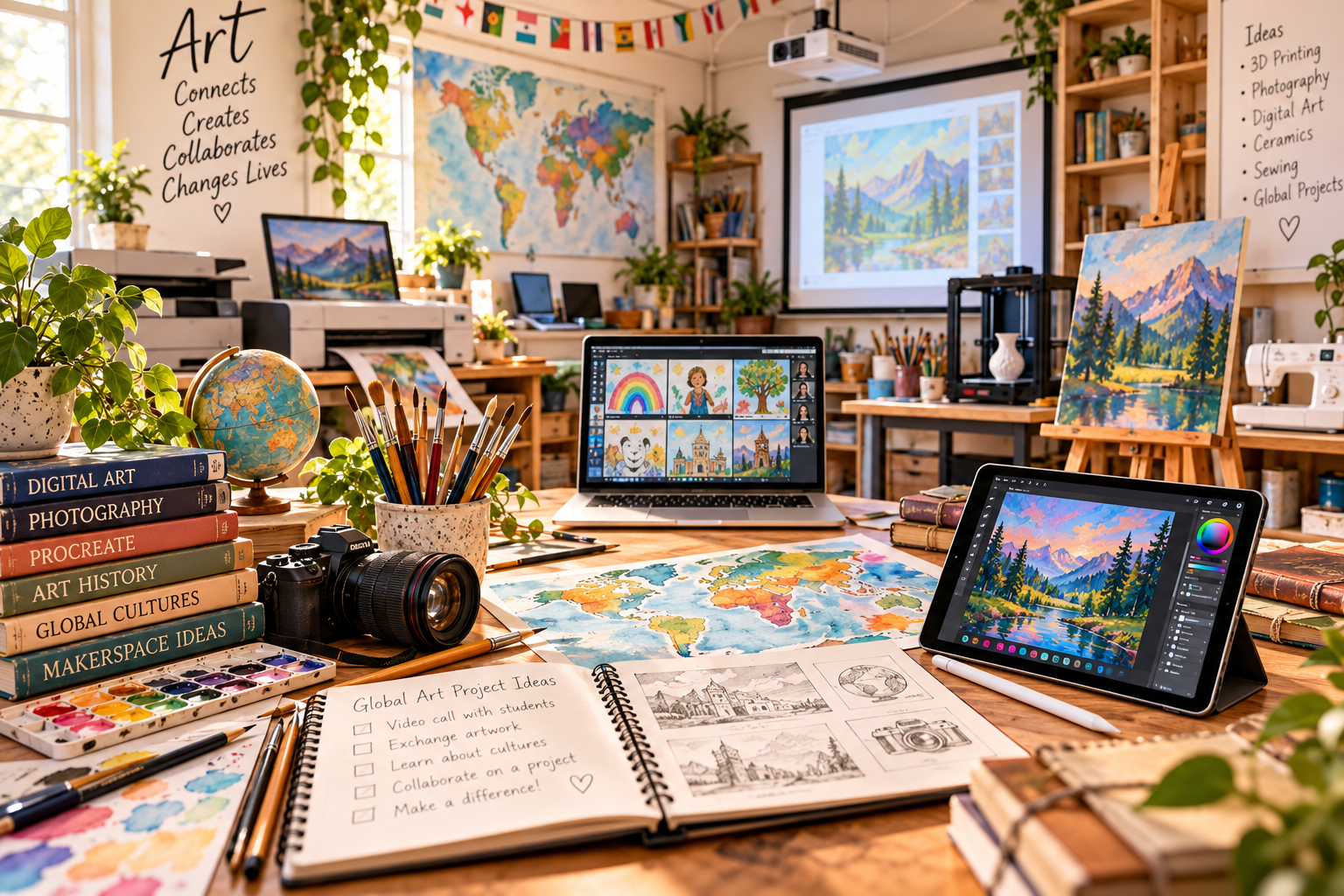
Imagine an art classroom where students can paint a beautiful portrait, photograph their masterpiece, create a digital illustration, and collaborate with young artists halfway around the world!
That's my dream classroom!
Technology offers incredible opportunities for art education. But I believe it should support creativity, not replace it.
Students already spend so much time looking at screens. I want my classroom to be a place where they can get their hands messy, experiment with materials, develop artistic skills, and make meaningful connections.
Let's use technology to expand creativity—not replace it!
An Art Classroom That Thinks Like a Makerspace
Imagine. Experiment. Innovate!
I love the idea of turning an art classroom into a makerspace!
Traditional makerspaces might include 3D printers, sewing machines, photography equipment, computers, and specialized tools.
Wouldn't that be exciting?
But I also know I don't want to spend my entire day troubleshooting machines instead of teaching art.
My ideal classroom would focus on a few practical tools:
Projectors to demonstrate techniques and transfer drawings onto canvas.
Copiers and scanners to enlarge, reproduce, and prepare artwork.
A quality camera to photograph finished paintings professionally.
Computers and tablets for digital painting, design, and portfolios.
Traditional art supplies for drawing, painting, sculpting, and creating by hand.
I would also love to collaborate with ceramics and innovation teachers or arrange field trips to local university makerspaces and technology centers.
Students could discover exciting creative tools without needing every machine in our classroom!
Teaching Digital Art Without Losing Traditional Skills
Master the pencil. Explore the possibilities!
Digital art programs such as Procreate and Adobe Photoshop offer wonderful opportunities for modern artists.
Students can experiment with color, create digital paintings, edit photographs, and build professional portfolios.
An iPad and Apple Pencil can become powerful creative tools!
But here's something I feel strongly about:
Technology should never replace learning how to draw and paint.
I want students to understand perspective, composition, light, shadow, color, and artistic techniques.
A computer can help an artist work faster, but foundational skills help an artist work better.
The best art education combines traditional craftsmanship with modern creative technology.
Can Artificial Intelligence Help Students Become Better Artists?
Use AI as a tool, not a substitute for thinking!
Artificial intelligence is changing how artists brainstorm, research, design, and create.
I want students to learn how to write effective prompts, explore visual ideas, and use AI ethically and productively.
For example, students might use AI to explore different lighting arrangements for a painting or brainstorm possible compositions.
Then they can evaluate the results, correct mistakes, and develop their own original artwork.
Students should also learn to question AI-generated information, respect copyright, and be transparent about how technology contributes to their projects.
The goal is to strengthen creative thinking, not outsource creativity.
Connecting Young Artists Around the World
Different countries. Shared creativity. Lasting friendships.
One of my biggest dreams is to connect my students with young artists in communities around the world.
Imagine students in Utah collaborating with students in the Philippines, Kenya, Singapore, England, or Finland!
They could meet through video calls, exchange artwork, learn about each other's cultures, and work together on meaningful art projects.
Perhaps they could illustrate a bilingual children's book, create artwork celebrating their communities, or design posters addressing a shared challenge.
These experiences could help students develop friendships, empathy, communication skills, and a broader understanding of the world.
I want these collaborations to be mutually beneficial, with students learning from one another and contributing their unique talents.
Art can connect people across cultures, languages, and distances!
Teaching Students to Solve Real-World Problems
Find a need. Create a solution. Make a difference!
I once attended a writing conference where Stephen R. Covey taught about finding problems in the world and helping solve them.
That idea has stayed with me.
Throughout history, innovation has helped people overcome tremendous challenges.
Electricity, heating, sanitation, and countless inventions have improved lives.
What problems could our students help solve today?
One challenge I see is a growing need for meaningful human connection.
Technology allows us to communicate with people around the world, yet excessive screen use can sometimes crowd out face-to-face relationships.
What if we used those same devices to help students develop genuine friendships and serve others?
Instead of simply consuming digital entertainment, students could become creators, collaborators, and problem-solvers.
That's an exciting purpose for technology!
Collaboration Makes Art Education More Powerful
Great ideas grow when minds work together!
My teacher-preparation program emphasizes collaboration with educational communities, and I see tremendous possibilities for bringing that principle into the art classroom.
Students can collaborate with other classrooms, teachers, artists, community organizations, universities, and international partners.
They can learn to listen, share ideas, solve problems, and create projects that are bigger than anything they could accomplish alone.
I don't want my students to think of art as something they only make for a grade.
I want them to discover how their artistic abilities can bless other people.
The Future of Art Education Is Both High-Tech and Hands-On!
Create with your hands. Connect with your heart.
My dream classroom combines the best of both worlds.
Students will learn traditional drawing and painting skills while exploring digital tools, photography, design, and responsible AI use.
They'll develop the confidence to create beautiful artwork and the courage to collaborate with people beyond their own communities.
Most importantly, they'll discover that creativity is a powerful way to serve others.
Technology gives us new tools. Art gives us a way to use them meaningfully!
Explore inspiring homeschool drawing and painting lessons at ArtDreamer Academy by OrganizeYourJoy.com