Drawing vs. Crafts: What Should Kids Actually Learn in Art?
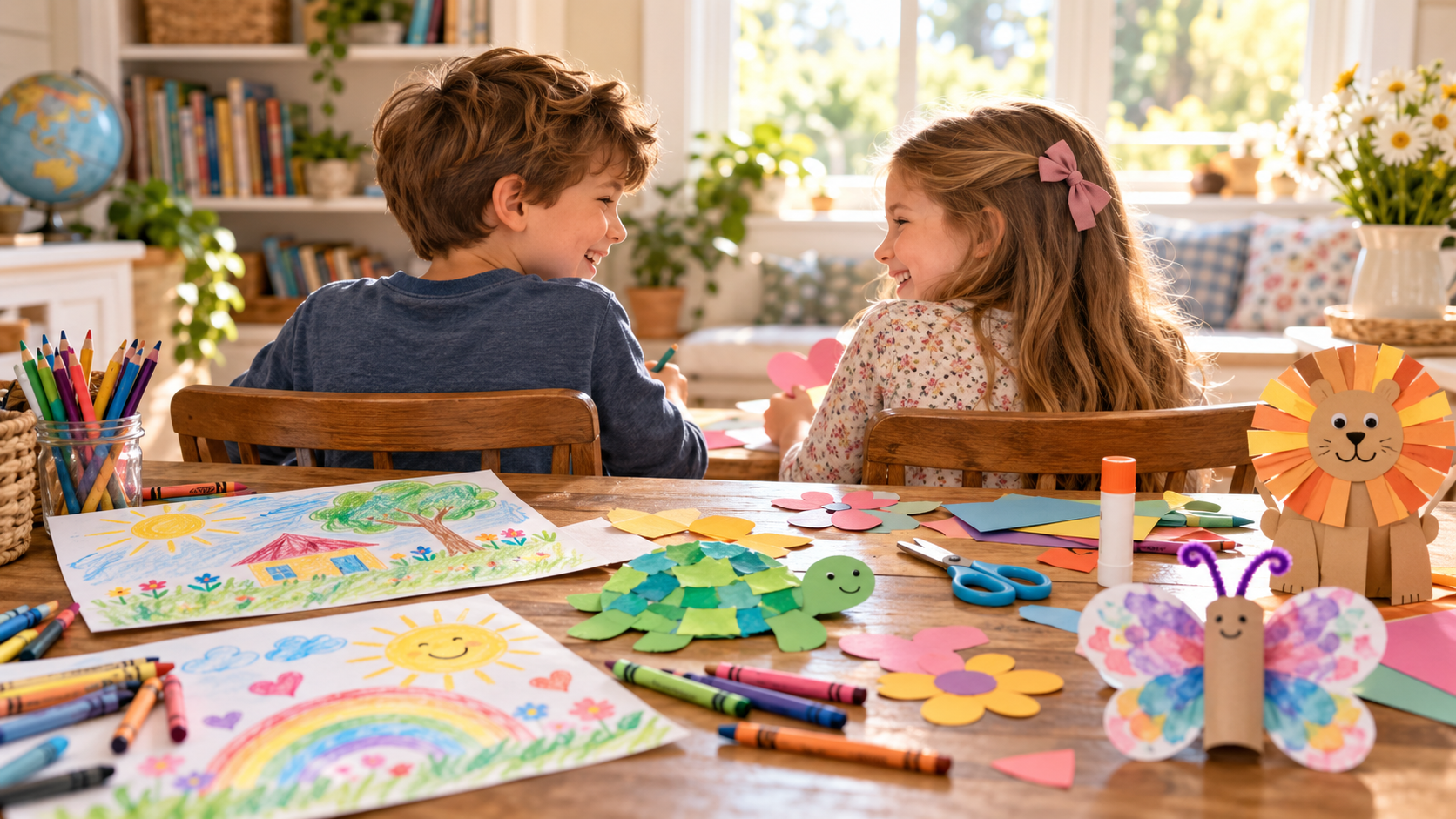
A happy brother and sister enjoy homeschool art education together, combining drawing and hands-on crafts at a bright creative table filled with pencils, crayons, paper, and finished projects. The scene shows how drawing lessons and crafts can work together to build creativity, confidence, and real art skills.
Crafts can be fun. They give kids a chance to cut, glue, decorate, and make something they are proud to show off.
But if your goal is a strong homeschool art education, crafts should not be the only thing your child learns.
Kids also need real art skills.
Crafts and Drawing Teach Different Things
Crafts often focus on following directions and assembling materials.
Drawing teaches children how to observe, compare, simplify, revise, and solve visual problems.
When kids learn to draw, they begin to understand:
shape
proportion
value
texture
perspective
composition
light and shadow
Those skills transfer into painting, design, illustration, and other creative work later.
Crafts Are Still Valuable
This does not mean crafts are bad.
Crafts can build:
fine motor skills
creativity
patience
confidence
enjoyment
They are especially helpful for younger children and seasonal projects.
The problem comes when art education becomes only crafts.
A child may finish lots of cute projects without ever learning how to really see and draw.
Drawing Builds Artistic Confidence
Drawing teaches kids that art is not just about being “talented.”
It is about learning how to look carefully and practice.
A complicated subject can be broken into simple shapes.
A mistake can be erased.
A drawing can be adjusted.
That process helps kids become more independent and less afraid of getting something wrong.
A Strong Homeschool Art Education Needs Both
The best approach is not drawing or crafts.
It is both.
Use crafts for exploration and fun.
Use drawing lessons for skill-building.
Add painting, color mixing, collage, and other media as your child grows.
This gives kids both freedom and structure.
What Should Kids Actually Learn in Art?
A well-rounded homeschool art education should help students learn how to:
draw from observation
simplify complex subjects
use value and shading
understand color
create balanced compositions
work with different materials
experiment without fear
develop their own ideas
That is what helps a child move from “I like making things” to “I know how to create art.”
A Gentle Place to Begin
You do not have to choose between fun and skill.
Let your child make the craft.
Then hand them a pencil.
Teach them to look closely, start with simple shapes, and build one skill at a time.
Art should be joyful, but it should also help kids grow.
At ArtDreamer Academy, our homeschool art lessons combine creative projects with real drawing and painting skills so kids can enjoy making art while becoming stronger artists.