The Best Homeschool Art Curriculum for Kids Who Love to Create
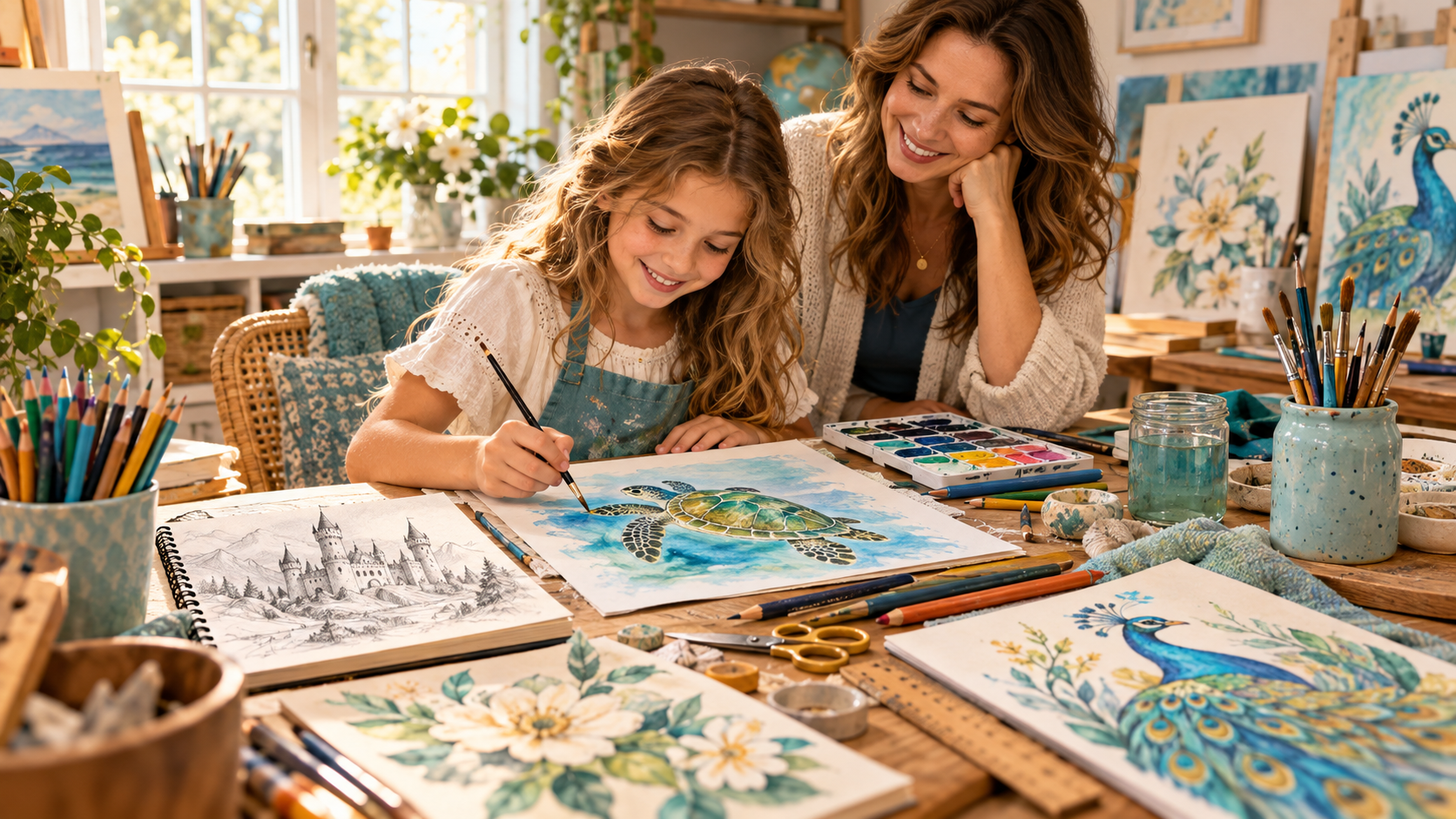
The Best Homeschool Art Curriculum for Kids Who Love to Create
Some kids are happiest when they are making something. They doodle, paint, build, cut, sketch, and turn ordinary assignments into something creative.
If that sounds like your child, art may be more than an elective. It may be one of the ways they understand the world.
A good homeschool art curriculum should do more than provide cute projects. It should help students build real skills, grow in confidence, and discover that art is something they can learn.
Teach Skills, Not Just Projects
Creative kids eventually want to know how things work.
Why does this drawing look flat? How do I mix better colors? How do I make something look realistic?
A strong art curriculum should gradually teach concepts like:
drawing and shading
color mixing
composition
perspective
proportion
texture
light and shadow
The project is fun, but the skill underneath it is what helps your child grow.
Make Art Challenging but Doable
A complicated subject becomes less intimidating when students learn to break it into simple shapes.
An elephant can start with an oval.
A castle can begin with rectangles and triangles.
A peacock tail can begin with radiating lines.
That moment when a student realizes, “I can actually do this,” builds confidence.
Give Structure Without Taking Away Creativity
Step-by-step art lessons do not have to make everyone’s work look the same.
Teach the technique, then let students make choices. They can change the colors, background, details, or mood.
A good curriculum teaches the how while leaving room for their imagination.
Art Is a Skill, Not Just a Talent
Your child does not have to be naturally “gifted” to become an artist.
Drawing improves with observation. Painting improves with practice. Creativity grows by creating.
Students need clear instruction, encouragement, and permission to make mistakes while they learn.
Connect Art to the Rest of Homeschool
Art can make other subjects more memorable.
Studying India? Draw the Taj Mahal, elephants, or peacocks.
Studying oceans? Paint sea turtles.
Reading fairy tales? Design castles and imaginary landscapes.
This is one of the beautiful things about homeschooling: learning does not have to stay in separate boxes.
A Gentle Place to Begin
You do not need the perfect art program or a closet full of supplies.
Start with one pencil. One lesson. One idea.
Let your child experiment, erase, repaint, and try again.
The goal is not just to finish an art project.
The goal is for your child to look at something beautiful and think:
“I can learn how to make that.”
At ArtDreamer Academy, our homeschool art lessons are designed to build real skills through approachable, step-by-step projects while still leaving plenty of room for creativity.