Art Lessons for Homeschool Teens: How to Move Beyond Crafts
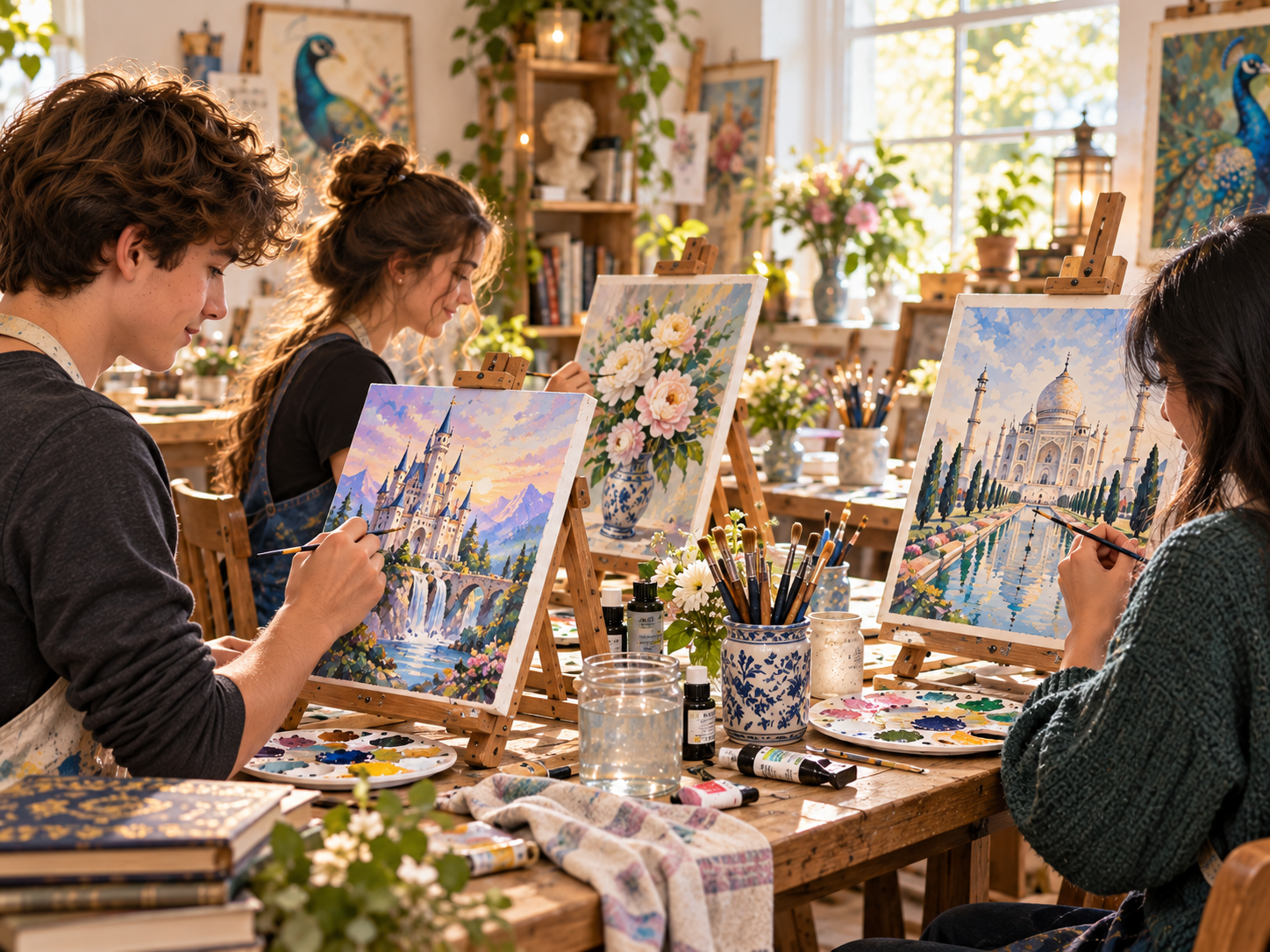
Teens often reach a point where simple craft projects no longer feel satisfying.
They want to make art that feels more serious, personal, and skill-based.
If your homeschool teen loves creating, the best art lessons for teens should help them move beyond cutting, gluing, and decorating into real drawing, painting, composition, and creative problem-solving.
Teens Need Real Art Skills
Crafts can still be fun, but teens usually want to know how to make their artwork look better.
They may want to learn:
realistic drawing
shading and value
perspective
proportion
color mixing
composition
painting techniques
figure drawing
texture
personal style
These are the skills that help students grow from “I like art” into “I am learning how to be an artist.”
Start With Projects That Feel Meaningful
Teens are more engaged when the subject feels interesting and worth their time.
Try projects like:
graphite animal drawings
castles and architecture
watercolor figures
acrylic still lifes
peacocks and wildlife
landscape studies
one-point perspective
Art Nouveau figures
mixed-media journals
The project should feel beautiful enough that they actually want to finish it.
Teach the Why Behind the Technique
Older students are ready to understand more than just “do this next.”
Explain why artists use:
Value to create depth.
Perspective to create space.
Composition to guide the viewer’s eye.
Color temperature to create mood.
Edges to control focus.
When teens understand why a technique works, they become more independent artists.
Let Them Make Choices
Step-by-step lessons are helpful, but teens also need creative ownership.
Let them change:
colors
backgrounds
subjects
poses
details
mood
composition
The goal is not for every student to create the same picture.
The goal is to teach enough skill that they can begin making artistic decisions of their own.
Use Real Materials
Teens are often ready to explore more serious art supplies.
Try:
graphite pencils
colored pencils
watercolor
acrylic
gouache
ink
mixed media
quality drawing paper
They do not to get off the screens, and have permission to use art materials. It may make a mess but given them the space to create helps them understand that their art matters.
Encourage a Sketchbook Habit
A sketchbook gives teens a place to experiment without pressure.
They can practice:
faces
hands
animals
clothing folds
thumbnails
color ideas
perspective
value studies
Not every page needs to be beautiful. Sketchbooks are where artists think.
Build Toward a Portfolio
If your teen is especially serious about art, begin saving finished pieces.
A small portfolio can help them see progress over time and prepare for:
high school art classes
college applications
scholarships
commissions
creative careers
It also gives them something powerful: proof that their skills are growing.
A Gentle Place to Begin
Teens do not need more busywork.
They need projects that respect their growing abilities and give them something real to learn.
Start with one skill. One project. One challenge that feels just beyond what they already know.
Great art lessons for teens should build skill, confidence, and creative independence—not just fill time. At ArtDreamer Academy, our step-by-step homeschool art lessons help teens move beyond crafts and build real drawing and painting skills through meaningful projects they can be proud of.